
Summary
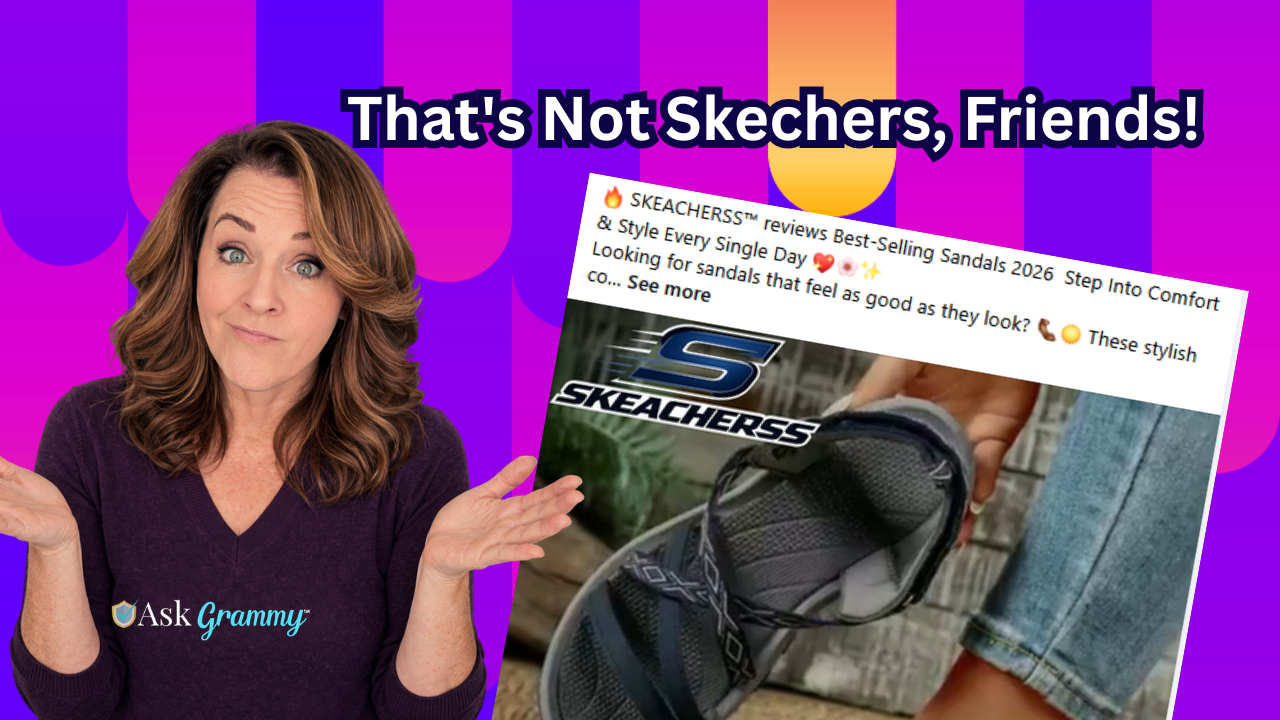
A Facebook ad is selling fake sandals under the name "SKEACHERSS™" - a deliberate misspelling designed to mimic the real Skechers brand. The site used fake celebrity photos as customer reviews, made unsupported medical claims, had no refund or shipping policies in place, and was registered just weeks before the ad ran. The domain has since gone offline, but a second scam site selling the same product is still active. This post walks readers through every red flag and shows them how to protect themselves before clicking "buy."
Those cute sandals with the crisscross straps are making the rounds on Facebook. The brand name looks familiar. The price looks amazing. And the whole thing is a scam. Let Grammy show you exactly how to spot it.
You’re scrolling through Facebook, minding your own business, when a pair of adorable sandals stops your thumb cold. Soft straps. Cushioned sole. The perfect warm-weather shoe. The ad says they’re from SKEACHERSS™ – and they even include a trademark symbol to make it look official.
But here’s the thing, friends. SKEACHERSS is not a real brand.
Skechers is real – and it’s a big deal. Founded in 1992, Skechers has grown into one of the most recognized footwear companies in the world, with over 3,000 styles in their lineup. They’ve earned that reputation over more than 30 years.
SKEACHERSS? That sneaky “A” and that extra “S” at the end? That’s not a brand. That’s a trick.
The Website Was a Red Flag Factory
The Facebook ad sent shoppers to hotdealsummer.com – a domain that was registered on March 27, 2026. That’s not a typo. Less than a month old when this ad was running.
If you try to visit that site today, you’ll get a “404 Page Not Found” error. They’ve vanished. But Grammy grabbed footage before they did, and what was on that site was a masterclass in scam tactics.
Here’s what was waiting for shoppers:
- A blaring “Last Day Sale!” banner – because urgency is a scammer’s best friend
- A jaw-dropping 60% off, bringing the price to just $39.99
- 122 five-star reviews – all of them suspiciously glowing
- A claim that the shoes were “Developed by Top Orthopedic Specialists” and described as a “lifesaver” for a long list of foot conditions
Now, legitimate comfort shoes can absolutely be good for your feet. But real brands don’t need to shout medical claims like that from the rooftop. That kind of language is designed to make you feel like you need the product – not just want it.
The “Testiphonials” Were Something Else Entirely
Grammy has a word for fake testimonials: testiphonials. And these were some of the boldest she’s seen.
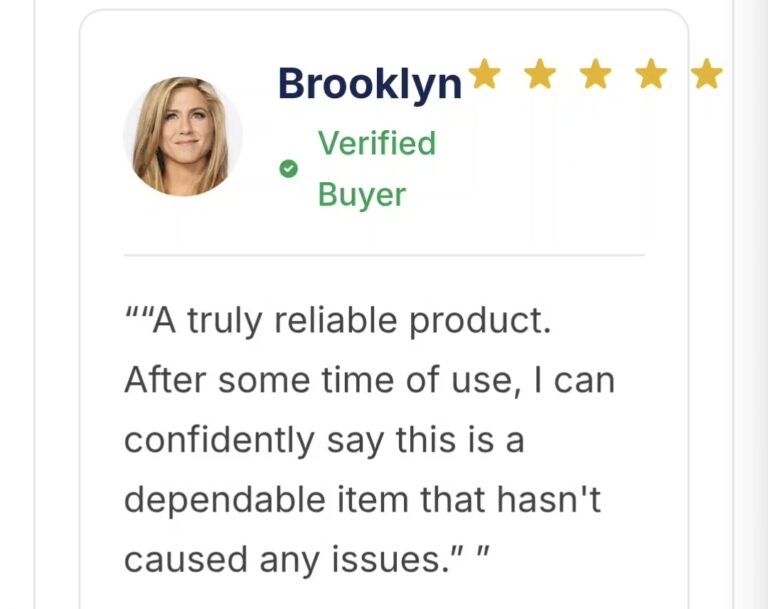
One glowing five-star review was attributed to a woman named “Brooklyn” – complete with her photo. Except that photo was actually of Jennifer Aniston.
Another review came from “Josephine,” with a photo of Julia Koch – an American philanthropist and one of the wealthiest women in the world.
Real brands don’t use photos of famous women and slap random first names underneath them. That is not how customer reviews work. If you see reviews with stock photos – or worse, photos of recognizable people – treat it as a hard stop.
The Policies Said It All (Or Rather, Said Nothing)
When Grammy clicked on the Return & Refund Policy, here’s what it said:
“This policy has not been set up yet.”
The Shipping Policy page? Same thing.
A real business tells you exactly how to get your money back before you ever spend it. When those pages are blank, that’s not an oversight – that’s intentional. They don’t want you to know because they don’t intend to make it easy.
One Domain Wasn’t Enough
Here’s where it gets even more interesting. These scammers weren’t running just one site.
There’s also sneaker-us.com, registered on March 4, 2026 – and still active as of this writing. Same products. Same fake reviews. They did remove the celebrity photos this time around (someone must have gotten nervous), but the bones of the scam are identical.
When scammers run multiple domains selling the same fake product, it’s a deliberate strategy. If one gets flagged or shut down, another is already up and running.
How to Protect Yourself
You don’t have to be a tech expert to spot these. Just slow down and check a few things:
- Search the brand name. “SKEACHERSS” returns nothing legitimate. The real brand is Skechers, and their official site is skechers.com.
- Check when the domain was registered. A site selling shoes that’s three weeks old is a warning sign. You can use a free tool like whois.com to check.
- Read the policies. If the refund or shipping policy is blank, close the tab.
- Reverse image search the product photos. A quick Google Image Search of the shoe photo will often show you exactly where those images were stolen from.
- Look at the reviews critically. 100+ five-star reviews on a brand-new site? That math doesn’t add up.
The Bottom Line
Those sandals were never going to arrive. Or if they did, they were never going to look – or feel – anything like what was advertised.
The real Skechers makes genuinely comfortable shoes. If you’re in the market for sandals that support your feet, visit skechers.com directly, or pick them up at a retailer you know and trust.
And the next time you see a brand name that looks almost right on Facebook? Take a second look. Scammers are counting on you scrolling too fast to notice the difference.
Grammy noticed. And now, so will you. 💛
Have you seen this ad – or one just like it? Drop me an email to let me know! The more we share, the more people we protect.