
Summary
An investigation into 33 Facebook and Instagram storefronts selling mass-produced bags as handmade, using AI-generated personas and emotional sadvertising to build trust with over 1.4 million combined followers.
I was doing one last reverse image search before recording a video about a single scam Facebook page selling “handmade” purses.
That search didn’t end with one page. It ended with 33.
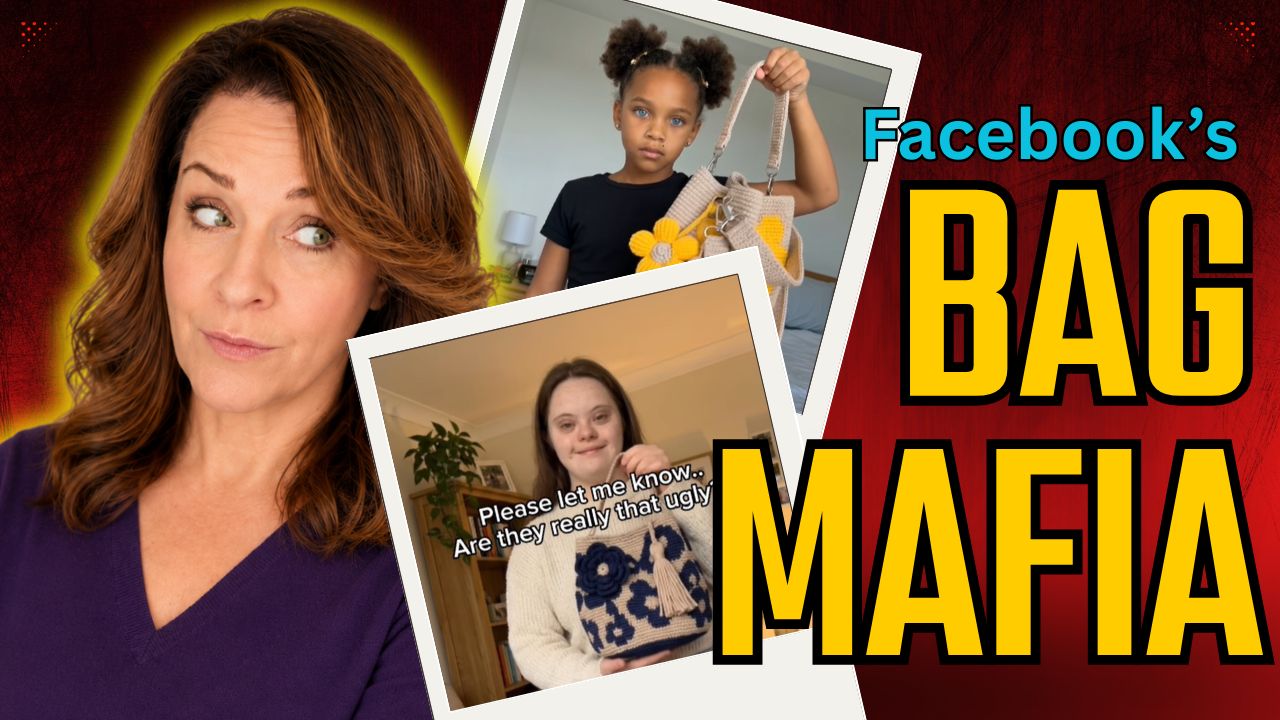
What I found is something I’m now calling the Purse Mafia, a network of storefronts across Facebook and Instagram, all presenting mass-produced bags as one-of-a-kind handmade creations, all built around fabricated “artisan” personas, and all reaching a combined audience of over 1.4 million followers.
I stopped documenting at 33. Not because I ran out of pages to find, but because I realized I was looking at a repeatable system, not a handful of unlucky coincidences. There are more of these out there. Many more.
Here’s everything I found, and everything you need to spot the next one yourself.
Prefer to read? Keep scrolling, the full investigation is below.
How This Started
This started with one reverse image search on a single suspicious purse page.
I expected to find one copied product photo. Instead I found the same bag, sold under a different name, by a different “artisan,” with a different sob story attached.
Then another. Then another.
I started tracking what I found in a spreadsheet. One page became five. Five became fifteen. Eventually, I had documented 33.
The Numbers
Across the 33 storefronts I tracked:
- 33 storefronts, all selling “handmade” bags
- Over 1.4 million combined followers, just on the Facebook pages
- Only about 6 to 8 actual bag designs being sold across all of them
- One bag sold by 9 different “artisans” as their own original, handmade work
- Markups averaging more than 3 times the real wholesale cost
- The worst offender: a page less than a week old, marking up a bag that cost roughly $2 by more than 2,150 percent, over 22 times what they actually paid for it
Thirty-three small businesses. Six or eight actual products. This was never a cottage industry. It’s a factory line wearing thirty-three different faces.
One Bag, Nine Names
Here’s what that pattern looks like up close.
One navy knit shoulder bag, wholesale cost $22.18 from a supplier called Luulla, is being sold right now as an original handmade creation by nine separate pages: AveraKnot, RootsandReins, Zaire Crochet Bags, JaydenKnots, Isaiahsthread, Loretta Crafts, Jalen Shells, Xavier Knots, and MilesThreads.
Nine “independent artisans.” One bag. One supplier.
A flower tote, wholesale cost $13.60, shows up across four different pages with the exact same story: handmade, one of a kind, made with love.
This isn’t four crafters who happen to like the same style. This is one dropshipper’s catalog, cut into pieces and handed out under different names.
The People Aren’t Real Either
Here’s the part that surprised me most, and it’s the part I most want you to understand.
I ran every single one of these 33 personas through an AI detection tool. All 33 came back flagged as artificially generated, with confidence scores ranging from 92 percent to 99.9 percent.
The hands you see crocheting in these videos? Not real hands doing real work. The face telling you a heartfelt story about starting a small business? Not a real person. There’s likely a real human being running the operation somewhere behind the scenes, but the person asking for your support, the one you’re rooting for, is a character. Built. Designed. Not someone who actually needs your help.
That matters because it changes what’s actually happening when you buy. It’s not just that the bag is mass-produced instead of handmade. It’s that the person and the product are both manufactured, dressed up to look human and handcrafted. A double bait and switch: you’re not just buying a product that doesn’t match its advertisement, you’re supporting a person who never existed, to receive an item that person never touched.
The Underdog Playbook
Look at who these pages say they are.
Across the personas I tracked, 16 used a “young Black man” storyline. 11 used some version of “person with Down syndrome.” Others included a veteran’s widow, someone with vitiligo, a young man overcoming hardship.
That’s not organic variety. That’s a formula.
Here’s why it works: when you believe you’re supporting someone overcoming a struggle, your guard comes down. You stop evaluating whether a $50 bag is a good deal and start thinking about whether you’re a good person for helping. And nobody wants to be the one who nitpicks a disabled kid’s small business, even when that kid doesn’t exist.
That’s not marketing. That’s emotional targeting wearing a heartwarming filter.
This Is Still Happening
This isn’t old news. It’s active, and it’s growing.
Some of these pages have been running for over a year, RootsandReins launched in the summer of 2025 and has grown to 347,000 followers since. But some of the newest pages I found are only days old: Kyle purses (2 days), Hexli tote bags (5 days), Taylor’s Bags (6 days), Loretta Crafts (16 days), Sarah’s Bags (26 days). Every one of them is already running the identical playbook.
Thirty-three is the number I documented. It’s not the size of the problem, it’s the size of the sample where I stopped. There’s no doubt more of these are out there right now than I’ve had time to track down.
Consumer Protection: What to Do If You’ve Already Bought
The bags in this investigation are real. They usually do arrive. This isn’t always a “you paid and got nothing” scam, it’s a “you paid for one story and got something else entirely” scam.
If what showed up doesn’t match what was advertised:
- Contact your bank or credit card company and ask about disputing the charge. This is called a chargeback. You don’t need the seller’s permission, and you don’t need to ship anything back first.
- Explain clearly that the item was materially different from what was advertised.
- Save your evidence before the page disappears: screenshots of the ad, your order confirmation, the product description, photos of what arrived, shipping information, and any messages with the seller.
Many of these pages ship overseas, which makes return shipping cost nearly as much as the item itself. That’s not an accident, it’s part of why so few people push back. A chargeback sidesteps that problem entirely.
Scam Checklist: How to Spot This Pattern Yourself
Before buying anything advertised as “handmade” from a social media ad, check these five things:
- Reverse image search the product photo. Use Google Lens or a reverse image search tool. See if the same product shows up on Shein, Luulla, Alibaba, AliExpress, Temu, DHgate, Taobao, or other marketplace sites.
- Search the exact wording. Copy an unusual sentence from the product description and search it in quotation marks. If multiple storefronts use identical language, that’s worth noting.
- Check the page and website age. A brand-new page isn’t automatically dishonest. But a brand-new page selling a “handmade” product with a fully built emotional backstory deserves extra scrutiny.
- Look for repeated identities and repeated products. Does this “independent artisan” sell the same product as other pages? Does the same kind of emotional story keep showing up across different accounts?
- Use a credit card, not an irreversible payment method, and don’t let a sad story rush you into buying before you’ve checked.
I use a set of free tools every time I investigate a page like this, the ones that check whether a photo or video is AI-generated, how long a page has actually existed, and whether a product image is original or borrowed. You’ll find all of them in my Scam Investigation Toolkit, linked at the top of AskGrammy.com.
See the Evidence for Yourself
I’ve embedded the full investigation spreadsheet below. It includes every storefront name, the product each one claims to have made, where the product actually comes from, the markup, the page’s follower count and age, and notes on which pages have already been shut down or changed their story.
This is a living document, not a final list. Pages disappear. Names change. Products get swapped. I’ll keep updating it as I find more.
About This Investigation
This investigation began with a routine reverse image search ahead of a planned video about a single storefront. What started as a check on one suspicious listing led to the documentation of 33 separate social media pages over the course of this research.
Findings are based on publicly available information: page creation dates, domain registration records, product image matches, AI-detection scoring, and pricing comparisons against publicly listed wholesale sources. The spreadsheet linked above will be updated as new information becomes available. If you’ve spotted a storefront using the same products, personas, or tactics described here, you can share it through the AskGrammy website.
You can use the same free tools I use to do your own investigating! Check out Grammy’s Scam Investigation Toolbox.
Have you come across a “handmade” shop that felt a little too perfect? Drop it in the comments, I’ll take a look.