
Summary
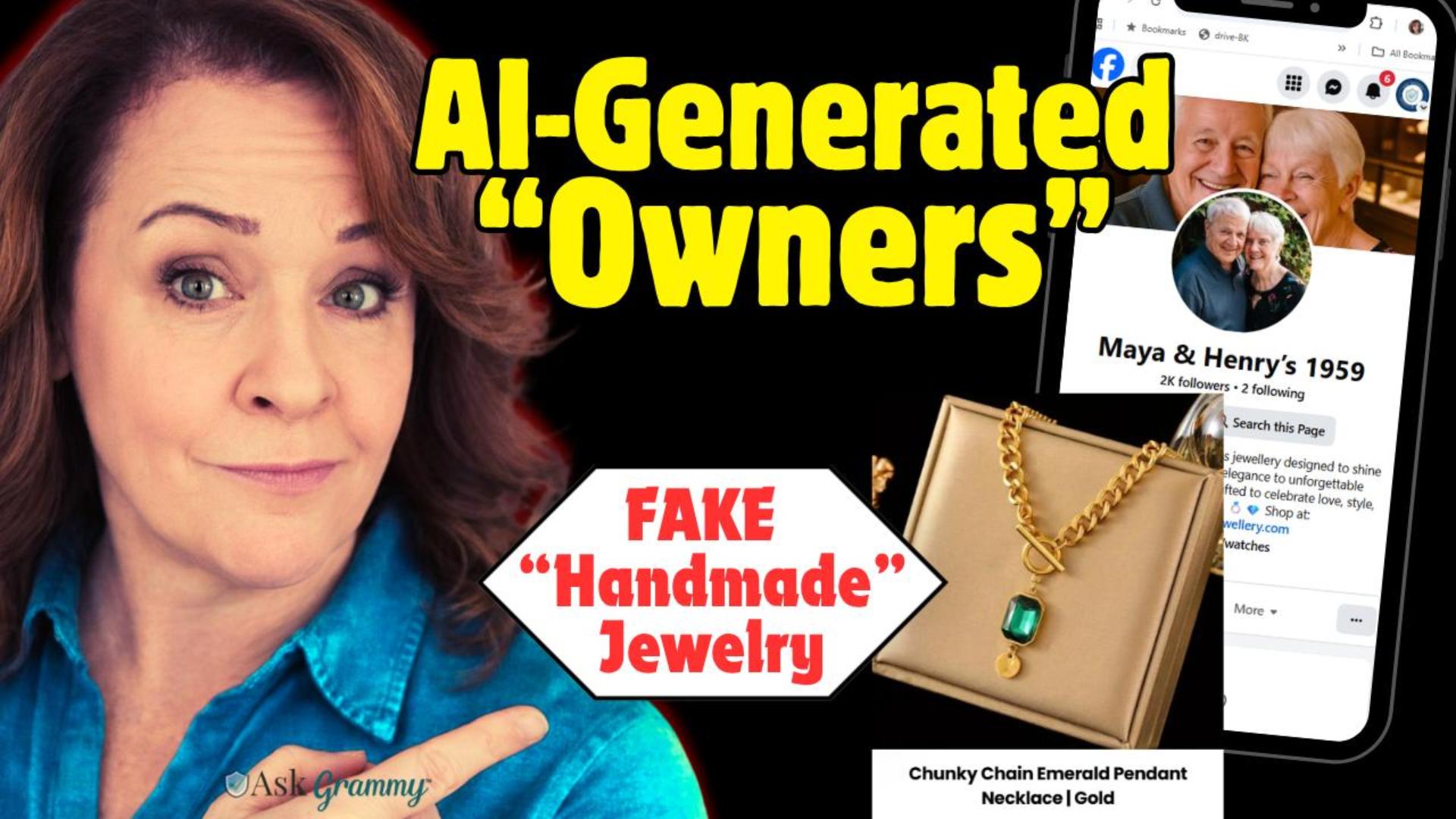
Investigation into two connected Facebook pages, Maya & Henry's 1950 and Maya & Henry's 1959, both claiming decades of heritage jewelry craftsmanship behind a fabricated elderly couple. Includes a Norton fraud flag, a hijacked page history, and AI detection confirmation.
Meet Maya and Henry. A sweet, devoted couple who’ve spent more than thirty years hand crafting jewelry together.
Except they haven’t spent a single day doing it, because Maya and Henry aren’t real people. And they’re not running one fake storefront. They’re running two.
Prefer to read? Here’s everything I found.
Two Pages, One Story
The first page calls itself Maya & Henry’s 1950. The second calls itself Maya & Henry’s 1959. Same couple, same “decades of craftsmanship” pitch, just a different founding year depending on which page finds you first.
Why two pages instead of one? My best guess: if one gets reported and taken down, the other one keeps right on selling.
Already Flagged
The website tied to the first page, mayahenry1950.com, is already flagged as a fake store by Norton, before I even started digging into it myself. That’s independent, third party confirmation, not just my opinion.
A Page With a Past Life
The second page has an even more interesting history. Before it became “Maya & Henry’s 1959,” it was created under a completely different name in Spanish, one that translates roughly to “The Great Blackout.” It sat quietly under that identity for months before getting flipped over to a heritage jewelry brand overnight.
That’s the same aged-page hijack tactic you’ll see across most of these scams. An old account with real history gets repurposed and renamed, so it looks like it’s been around far longer than the business actually has.
Confirmed: Neither of Them Is Real
I ran both “Maya” and “Henry’s” photos through Hive Moderation’s AI detection tool. Both came back confirmed as AI generated. There is no elderly couple behind either page, and there never was.
The Pattern
Two pages, two invented founding years, one already flagged as fraudulent, and a second one with a completely unrelated past life. Add in a fully fabricated couple, and what you’re left with is a brand built entirely out of borrowed trust and manufactured nostalgia.
How to Protect Yourself
- If you see the same story on more than one page, that’s a red flag, not reassurance. Real family businesses don’t need backup identities.
- Check whether a site is already flagged by your antivirus or browser security tools. Norton, and similar tools, often catch known fraudulent stores before you even have to investigate.
- Look up a Facebook page’s name history. A page that used to be something completely unrelated is a strong sign it’s been repurposed for a new scam.
- Run product and profile photos through an AI detection tool. It takes seconds and can confirm what your gut is already telling you.
Scam Checklist: Is It a Fake “Heritage Brand” Ad?
- Does the same story or product show up on more than one page?
- Is the site already flagged as suspicious by antivirus or security tools?
- Does the page’s name history show it used to be something completely unrelated?
- Are the “owners” pictured only in a handful of similar looking, staged photos?
- Does the claimed business history not match the domain’s actual registration date?
If you checked more than one box, slow down before you buy.
Want to Learn to Investigate Scams Like This Yourself?
Every tool I used in this investigation, Facebook’s Page Transparency feature, an AI image detector, and a quick domain lookup, is completely free. You’ll find all of them, along with short how-to videos for each, in my Scam Investigation Toolbox. Just look for it in the main menu right here on AskGrammy.com.
About This Investigation
This investigation is part of an 8 part series uncovering fake online stores that use fabricated “family” and “owner” personas to sell products through emotional manipulation. All findings in this post are based on publicly available information: Facebook’s Page Transparency tool, public domain registration records, and AI image detection using Hive Moderation. Screenshots were captured directly from the live ad campaigns and public Facebook pages.