
Summary
Investigation into Amaya's Buckles, a Facebook page with 176,000 followers that has already worn three completely different identities in five months. Includes AI detection confirming both "owners" are fabricated, a Norway based page management trace, dropshipped products marked up from AliExpress, and a name brand shoe match to Steve Madden.
176,000 people follow Amaya’s Buckles. They’ve watched her handcraft Western boots and buckles, cheered her on in the comments, and jumped to defend her husband against hateful commenters.
None of it is real. Not the boots. Not the husband. Not even Amaya herself.
Prefer to watch? Here’s everything I found.
176,000 Followers, Including 25 of Mine
Before digging into anything else, I want you to sit with one number: 176,000 followers. When I checked mutual followers between Amaya’s page and my own Ask Grammy Facebook page, I found 25 people who follow both. Twenty five people who came here specifically to learn how to spot scams are also following this one.
This isn’t a story about gullible people. It’s a story about how good these operations have gotten.
A Page That’s Already Worn Two Identities, and Is Working on a Third
The page was created on February 12, 2026, making it just over five months old. But it didn’t start as Amaya’s Buckles at all.
When it first launched, this same page was called Bluefeather Studio, featuring a completely different persona: an indigenous woman selling handmade jewelry. That identity lasted exactly one month and one day before flipping over to Amaya’s Buckles on March 13, 2026.
And here’s where it gets stranger. While researching this investigation, I caught the page already showing early signs of shifting again, this time toward an older woman creating fantasy dragon art. A little digging turned up a separate, brand new TikTok account, “Dragons by Hazel,” with a domain registered at the end of June. Same playbook, new persona, already prepped and waiting in the wings.
That means Amaya is likely headed the way of Bluefeather. Once enough people start catching on to a persona, it gets retired, and a new one takes its place.
Run From Norway, Not Texas
Under “People Who Manage This Page,” the primary country listed for page managers is Norway. Not Texas, where Amaya supposedly lives and works. Not anywhere near the workshop pictured in the videos.
An Engineered Wedge
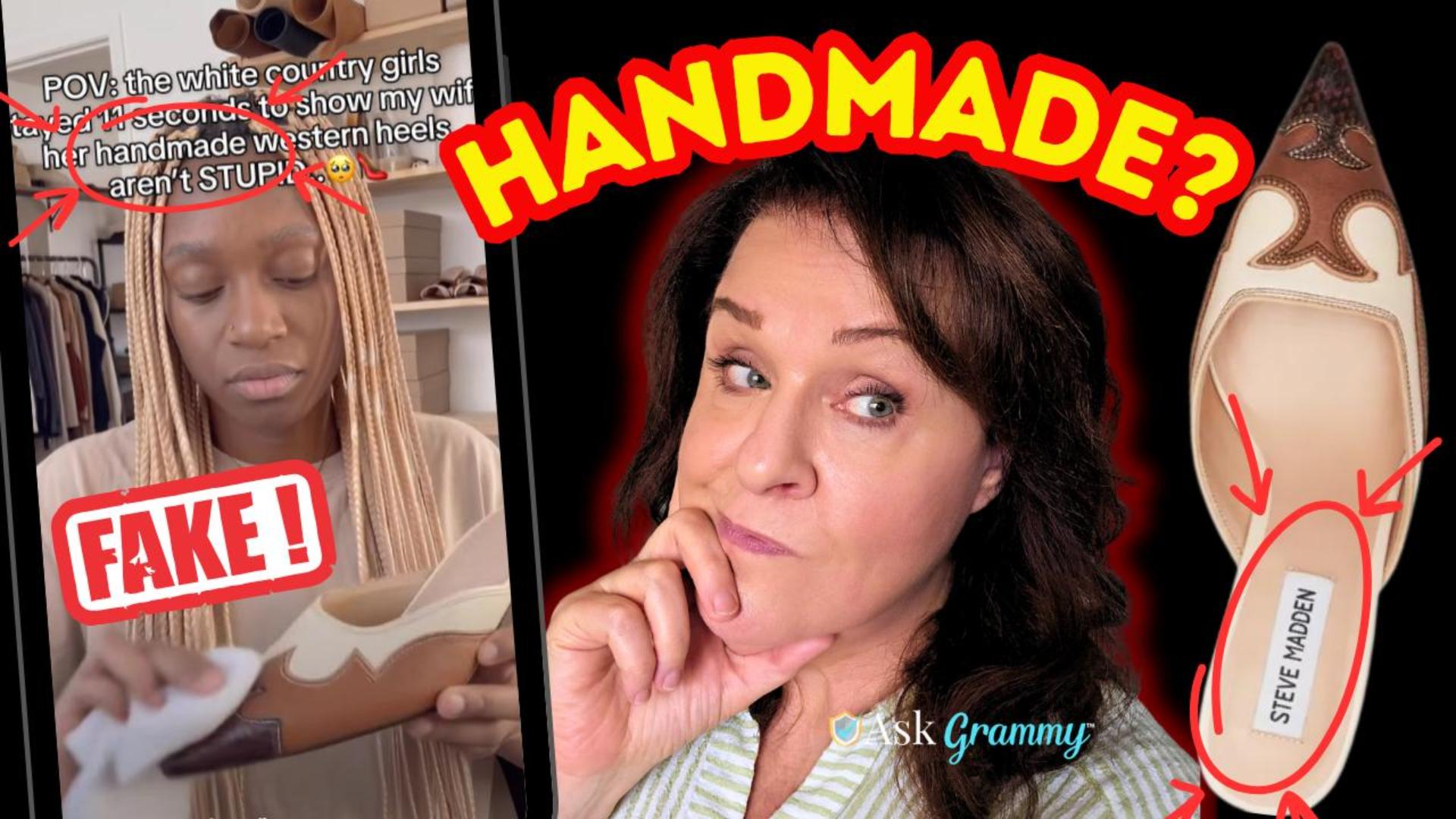
Look closely at the captions on Amaya’s videos and you’ll notice a theme: a Black artist and her husband calling out “the white country girlies” to support the business. That’s not an accident, and it’s not passion. It’s an engineered wedge, using race and gender as bait to drive arguing, defending, and sharing, with the actual product almost beside the point.
This is worth sitting with for a moment, because it’s one of the ugliest parts of this whole scam. There is no Black business owner here. There is no owner at all, just an anonymous operation, apparently run from Norway, that chose this persona specifically because of the reaction it would generate. When scams like this one eventually get exposed, the backlash and suspicion too often lands on real Black entrepreneurs, which is exactly backwards. The people actually responsible have no race, no face, and no name. They shouldn’t get to hide behind one they invented.
Confirmed: Neither of Them Is Real
I ran both Amaya and her husband through Hive Moderation’s AI detection tool. Amaya came back 99.7% likely to be AI generated. Her husband came back 99.9%. Neither of these people exist, and never have.
The Products, Marked Up From AliExpress
Amaya’s store sells western belts, buckles, bracelets, “culture” blankets, and colorful bags. A reverse image search on one of the bags turned up the exact same item on AliExpress, priced at $18.13. Amaya’s Buckles sells it for $59.99.
That’s not handmade craftsmanship. That’s a dropshipped item, marked up more than three times over, sold to you with a fabricated story stapled on top.
The Shoes: Steve Madden, Not Handmade
A reverse image search on the “handcrafted” Western heels turned up the exact match: the Steve Madden Pointed Toe Mule, sold widely under its real name.
And this pattern doesn’t stop with Amaya. The same reverse image search turned up other pages, including one called Riley’s Rodeo, running the identical playbook: a different name, a different “artisan,” the exact same shoes. Once one version of a scam finds success, others copy it or spin up their own version of the same script.
The Pattern
A page that’s already worn three identities in five months. Management traced to Norway. A fabricated couple confirmed by AI detection at over 99% certainty. Products dropshipped from AliExpress and marked up several times over. A name brand shoe passed off as handmade. And a deliberate racial wedge used to drive engagement, one that risks real harm to actual Black business owners once the truth comes out.
How to Protect Yourself
- Check a page’s name history before trusting its age. A five month old page can still claim to be “years in the making” if it’s been recycled from an earlier identity.
- Look at mutual followers. If people you know and trust are already following a page, that’s worth a second look, not automatic reassurance.
- Run a reverse image search on “handmade” products. If the exact item shows up on AliExpress, Amazon, or a name brand retailer, you have your answer.
- Notice when an ad leans harder on identity and emotion than on the product itself. That’s often a deliberate strategy to bypass your normal skepticism.
- Remember that the real operator behind a scam has no identity at all. Don’t let a fabricated persona shape how you feel about real people who share that identity.
Scam Checklist: Is It a Fake “Handmade” Storefront?
- Has the page’s name or persona changed in its history?
- Does the page management trace back to a country that doesn’t match the claimed location?
- Does a reverse image search show the “handmade” item for sale elsewhere at a much lower price?
- Is the emotional story doing more work than the actual product?
- Do other pages exist selling the exact same items under different names?
If you checked more than one box, slow down before you buy.
Want to Learn to Investigate Scams Like This Yourself?
Every tool I used in this investigation, Facebook’s Page Transparency feature, an AI image detector, and a reverse image search, is completely free. You’ll find all of them, along with short how-to videos for each, in my Scam Investigation Toolbox. Just look for it in the main menu right here on AskGrammy.com.
About This Investigation
This investigation is part of an 8 part series uncovering fake online stores that use fabricated “family” and “owner” personas to sell products through emotional manipulation. All findings in this post are based on publicly available information: Facebook’s Page Transparency tool, public domain registration records, AI image detection using Hive Moderation, and product listings publicly available on AliExpress and other retail websites. Screenshots were captured directly from the live ad campaign and public Facebook page.