
Summary
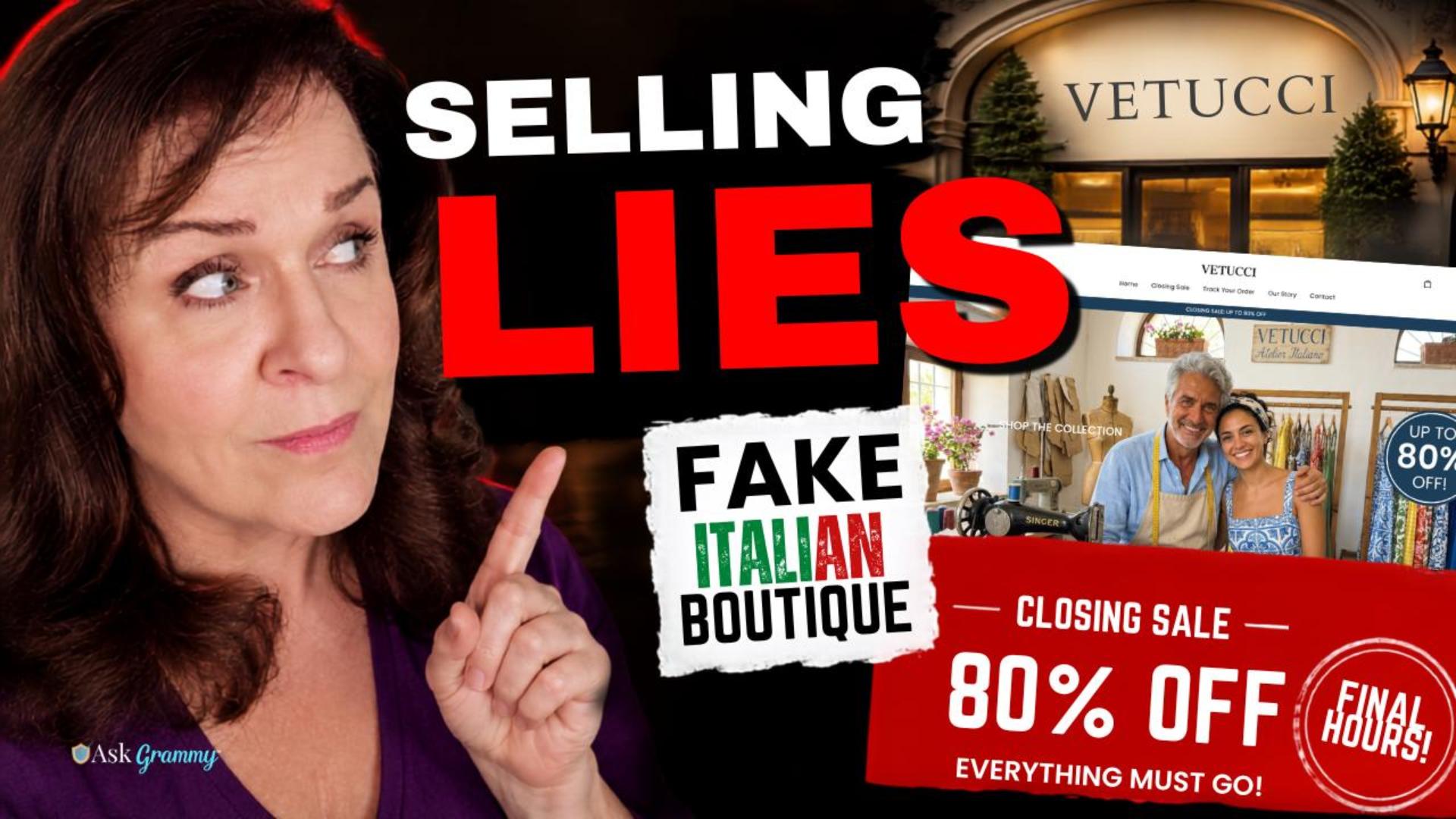
Investigation into the Vetucci Facebook and Instagram ad campaign, revealing an AI generated "family," a recycled Facebook page with an unrelated past identity, and a domain registered just months before the "decades old" closing sale claim.
There’s an ad running on Facebook and YouTube right now for a little Italian boutique called Vetucci. Eighty percent off, everything must go, a heartfelt family finally closing up shop after all these years.
It’s a lovely story. Too bad none of it is true.
Prefer to read? Here’s everything I found.
The Ad That Told On Itself
The very first clue in this one didn’t even require any digging. Sitting quietly in the corner of the ad itself are three small words: generated by AI.
That’s not me catching them. That’s the platform’s own disclosure label, sitting right there in plain sight, and most people scroll right past it without a second glance.
Meet the “Family”
The ad features a warm, weathered tailor working at his table, and a young woman helping him cut fabric, presented as the family behind decades of Italian craftsmanship.
They don’t exist. Every image of this “family” is AI generated, and there is no atelier, no tailor, and no closing sale story behind any of it.
A Page With a Past Life
Here’s where it gets interesting. I checked the Facebook page’s transparency history, and it turns out “Vetucci” hasn’t always been Vetucci.
This page was originally created years ago under a completely different name, written in Chinese characters that translate roughly to “stock trading expert.” It sat under that identity for a long stretch before quietly getting renamed to Vetucci this past spring, right around the time this ad campaign launched.
That’s a classic aged-page hijack. An old account with real history and built-in trust gets purchased or repurposed, then dressed up as something else entirely. The age of the page is meant to make you feel safe. It’s a costume, not a credential.
A Business With No History
A boutique that’s supposedly been open long enough to build a loyal following and a heartfelt closing story needs, at minimum, an actual online presence to match. Instead, the domain behind this “family legacy” business was only registered a few months ago.
Real businesses closing after years of hard work don’t need a domain that’s newer than most people’s phone contracts.
The Pattern
Put it all together and here’s what you’re looking at: a hijacked Facebook page with a completely unrelated past, a brand new domain dressed up as decades of history, and a “family” that was never real to begin with. All wrapped around a manufactured sense of urgency designed to get you to buy before you stop and think.
How to Protect Yourself
- Check the page’s history before you trust its age. Facebook’s Page Transparency tool will show you every name a page has ever had. If a “family business” page used to be something completely unrelated, that’s your answer.
- Look up the domain. A quick WHOIS search takes seconds and tells you exactly how old a website really is, no matter what the story on it claims.
- Watch for “generated by AI” disclosure tags. Some platforms are starting to label this content directly. Don’t scroll past it.
- Be suspicious of urgency paired with sentiment. “Closing sale” and “family legacy” stories are designed to make you feel like you’ll miss out on something meaningful. Real urgency and real sentiment can both survive you taking two extra minutes to check.
Scam Checklist: Is It a Fake “Family Business” Ad?
- Does the ad include an AI disclosure label you might have missed?
- Has the business’s Facebook page changed names or identities in its history?
- Is the domain newer than the business’s claimed history would suggest?
- Are the “owners” or “family” pictured only in a handful of staged looking photos?
- Is there urgency language (“closing,” “final hours,” “everything must go”) paired with a sentimental backstory?
If you checked more than one box, slow down before you buy.
Want to Learn to Investigate Scams Like This Yourself?
Every tool I used in this investigation, Facebook’s Page Transparency feature, a WHOIS domain lookup, and an AI image detector, is completely free. You’ll find all of them, along with short how-to videos for each, in my Scam Investigation Toolbox. Just look for it in the main menu right here on AskGrammy.com.
About This Investigation
This investigation is part of an 8 part series uncovering fake online stores that use fabricated “family” and “owner” personas to sell products through emotional manipulation. All findings in this post are based on publicly available information: Facebook’s Page Transparency tool, public domain registration records, and AI image detection using Hive Moderation. Screenshots were captured directly from the live ad campaign and public Facebook page.