
Summary
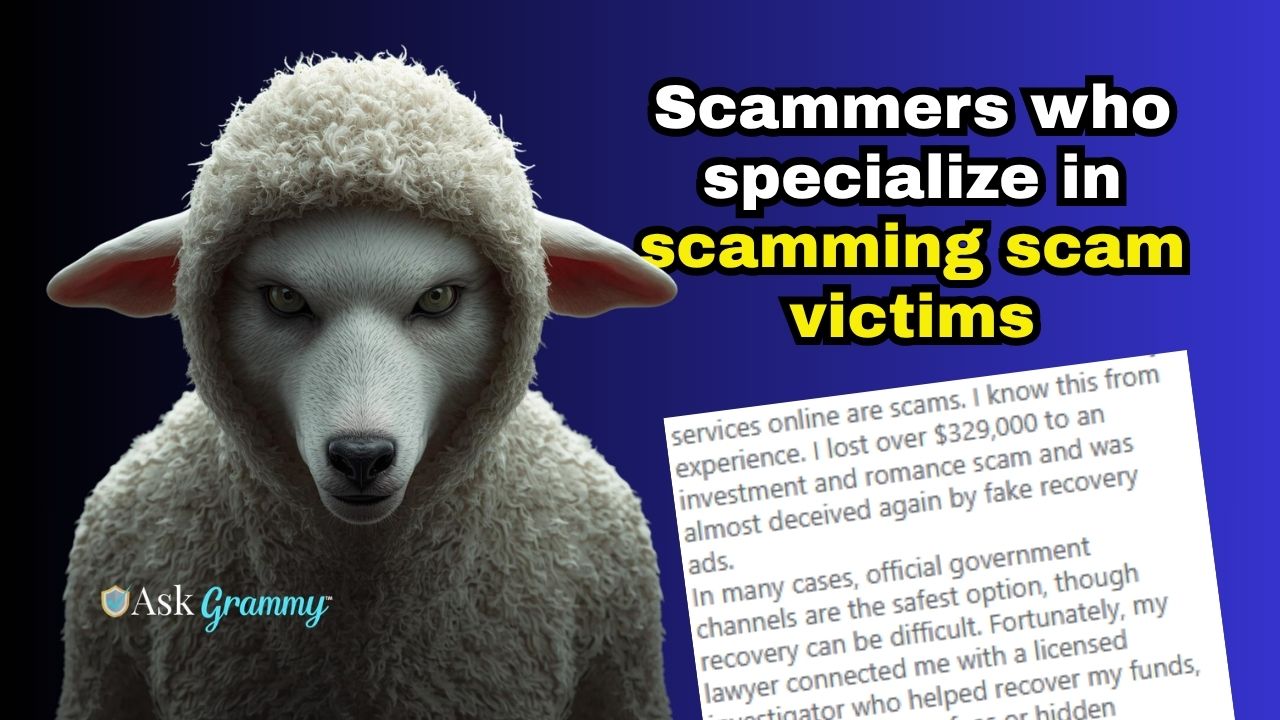
Recovery scams target people who have already been scammed, offering false hope of getting their money back. In this post, Grammy breaks down a real example from a Facebook comment, explains how recovery scams work, highlights key warning signs, and shares safe, legitimate steps you can take if you’ve been a victim.
Every day, as I make my way through my inbox, my comments, and my messages, I see a little bit of everything.
Some helpful.
Some harmless.
And some that show up in full masquerade costume – pretending to be the good guys.
This one?
This one was particularly bold.
A “Helpful” Comment… Or So It Seemed
Recently, someone left a comment on the Ask Grammy Facebook page that looked, at first glance, surprisingly responsible.
They warned people about scams.
They shared a personal story.
They even encouraged others to be cautious.
Sounds like one of us, right?
Oh… not even close.
Here’s part of what they posted:
“Be cautious – most so-called fund recovery services online are scams… I lost over $329,000… Fortunately, my lawyer connected me with a licensed investigator who helped recover my funds… If you’ve been a victim, feel free to message me…”
Now, if you read that quickly, it feels reassuring.
It sounds like someone who’s been through something awful… and wants to help.
But if you slow down – just a little – the whole thing starts to unravel.
Watch the Breakdown (Video)
(In this video, I walk through the exact comment and show you what’s really going on behind the scenes.)
What This Actually Is: A Recovery Scam
This is what’s known as a recovery scam.
And it’s one of the cruelest scams out there.
Here’s how it works:
- You’re scammed (investment scam, romance scam, crypto – you name it)
- You’re upset, embarrassed, and desperate to fix it
- Along comes someone offering “help” and claiming they’ve been in your situation
- They claim they can recover your money
- And then… they take even more
That line in the comment?
“Message me for the contact…”
🚩 There it is.
Not “Here’s a public resource.”
Not “Here’s a verified agency.”
No.
They want to pull you into a private conversation – where there are no witnesses, no scrutiny, and no easy way to verify what they’re telling you.
The Part That Makes This Especially Sneaky
This scam is layered.
It starts by telling you the truth:
“Most recovery services are scams.”
Which is actually correct.
But then…
It quietly positions their “investigator” as the exception.
That’s not an accident.
That’s strategy.
They lower your guard…
Earn your trust…
And then redirect you exactly where they want you.
A Big Red Flag You Might Miss
When I clicked through to the profile behind this comment, something interesting showed up.
The exact same message had been posted over and over again – across multiple pages.
Including:
- Business pages
- Law firms
- Scam awareness groups
- Even other “recovery” pages
Word for word.
That’s not someone sharing a personal experience.
That’s a script.
About Those “Recovered Funds” Stories
In the video, you’ll notice these posts often include very specific details:
- “I lost $329,000…”
- “My lawyer referred me…”
- “No upfront fees…”
Those details are there for a reason.
They make the story feel:
- Real
- Relatable
- Credible
But here’s the truth:
Anyone who legitimately recovers funds through official channels is not:
- Posting copy-and-paste messages across Facebook
- Asking strangers to message them privately
- Acting as a go-between for some mystery “investigator”
That’s not how real recovery works.
So What SHOULD You Do If You’ve Been Scammed?
This part matters.
If you’ve been a victim, you deserve real help – not another layer of deception.
Start here:
- Read my post on What to Do in the First 10 Minutes After You’ve Been Scammed
- Report it to the Federal Trade Commission at ReportFraud.ftc.gov
- File a report with the FBI Internet Crime Complaint Center (IC3.gov)
- Contact your bank or payment provider immediately
- Preserve all emails, messages, and transaction records
Is recovery guaranteed?
No.
But these are the legitimate paths – not a stranger in your Facebook comments.
A Gentle but Important Reminder
If someone approaches you after you’ve been scammed and says:
“I can help you get your money back…”
Please pause.
Take a breath.
And look closely.
Because more often than not, you’re not being rescued.
You’re being targeted again.
Grammy’s Final Thoughts
Scammers don’t just steal money.
They exploit hope.
And recovery scams?
They’re built entirely on that hope.
So if you take one thing from this, let it be this:
You should never have to pay – or privately message a stranger – to “unlock” help.
Real help doesn’t hide in your inbox or in the comment section of social media.
If you ever come across something that feels off, you can always send it my way.
We’ll take a look at it together.
Stay safe out there. 💙
– Grammy